
CHEMISTRY
PERIODIC TABLE
- Dobereiner’s Triads (1817): Atomic mass of the middle element is roughly the arithmetic mean of the other two (e.g., Lithium, Sodium, Potassium; Chlorine, Bromine, Iodine; Calcium, Strontium, Barium).
- Newlands’ Law of Octaves (1864): Every eighth element has properties similar to the first, analogous to musical notes. Limitation: Valid only up to Calcium (Z=20).
- Mendeleev’s Periodic Law (1869): Properties of elements are periodic functions of their atomic masses.
- Predicted unknown elements: Eka-Boron (Scandium), Eka-Aluminium (Gallium), Eka-Silicon (Germanium).
- Modern Periodic Law (Henry Moseley, 1913): Properties of elements are periodic functions of their atomic numbers (Z).
- The modern table contains 7 horizontal periods and 18 vertical groups (columns).
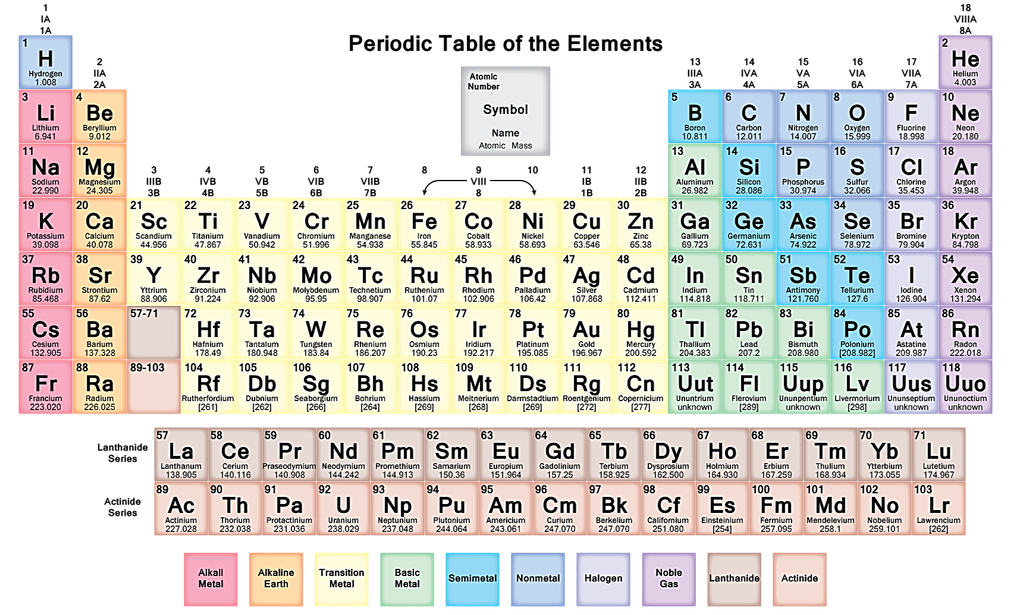
Master Table: Periodic Trends (Across a Period vs. Down a Group)
| Property | Along a Period (Left to Right) | Down a Group (Top to Bottom) | Scientific Reason for WBPSC Mains |
| Atomic Radius / Size | Decreases | Increases | Left to right: Effective nuclear charge increases, pulling electrons closer. Top to bottom: New electron shells are added. |
| Valence Electrons | Increases (from 1 to 8) | Remains Same | Number of valence electrons determines group number. |
| Valency | Increases from 1 to 4, then decreases to 0 | Remains Same | Group 1 = 1, Group 14 = 4, Group 17 = 1, Group 18 = 0. |
| Ionization Energy / Potential | Increases | Decreases | Harder to remove electrons as nuclear attraction grows across a period; easier down a group due to increased shielding. |
| Electronegativity | Increases | Decreases | Tendency of an atom to attract shared electrons increases toward the top right. |
| Electron Affinity | Increases (becomes more negative) | Decreases | Energy released on gaining an electron increases across a period. |
| Metallic Character (Electropositive) | Decreases | Increases | Tendency to lose electrons drops across a period, rises down a group. |
| Non-Metallic Character | Increases | Decreases | Tendency to gain electrons rises toward the halogen group. |
| Nature of Oxides | Basic Amphoteric Acidic | More Basic | Sodium oxide is strongly basic, Aluminium oxide is amphoteric, Sulfur oxides are acidic. |
| Reducing Property | Decreases | Increases | Strongest reducing agents are alkali metals (Group 1). |
| Oxidizing Property | Increases | Decreases | Strongest oxidizing agents are halogens (Group 17). |
Important Facts
- Highest Electronegativity vs. Highest Electron Affinity:
- Highest Electronegativity: Fluorine (F).
- Highest Electron Affinity: Chlorine (Cl) (Chlorine releases more energy than Fluorine because Fluorine’s tiny 2p subshell has high electron-electron repulsion).
- Liquid Elements at Room Temperature (25°C):
- Mercury (Hg}): Only liquid metal.
- Bromine (Br}): Only liquid non-metal.
- (Gallium and Cesium melt just above room temperature, around 28–30°C).
- Smallest and Largest Atoms:
- Smallest atom: Helium (by van der Waals radius) / Hydrogen (by covalent radius).
- Largest atom (non-radioactive): Cesium (Cs).
- Transition Elements (d-block) & Inner Transition (f-block):
- d-block (Groups 3–12): Exhibit variable valency, form coloured ions, and act as industrial catalysts.
- Lanthanides: 14 elements from Cerium (Z=58) to Lutetium (Z=71).
- Actinides: 14 elements from Thorium (Z=90) to Lawrencium (Z=103); all are radioactive.
- Elements beyond Uranium (Z=92) are synthetic and termed Transuranic elements.